Jeju Aerospace Museum with Kids: A Hands-On Day of Flight and Science.
Opening Hours: 9:00 AM – 6:00 PM Last admission (including online ticket holders): 5:00 PM
The Real Lesson: Curiosity Doesn't Need a Lecture
There’s a particular kind of tired that only a good field trip can produce — the kind where your legs ache a little, your phone is full of blurry action shots, and your kids are still talking about airplanes at bath time. That was us, last week, after a day at Jeju Aerospace Museum.
If you’re raising kids abroad and looking for things to do in Jeju that go beyond the beach and the mandarin orchards, this museum deserves a spot on your list. It’s the rare kind of “educational” outing that doesn’t feel like homework — for them or for you.
Why We Chose Jeju Aerospace Museum
We’re always looking for experiences that connect to something my kids are already curious about. Lately, that’s been how things work — why planes don’t fall out of the sky, what a cockpit actually looks like up close, that kind of thing. Jeju Aerospace Museum turned out to be exactly the right answer: part museum, part science center, part playground for future pilots.
It’s also simply a good rainy-day or hot-afternoon option on an island where so much of the itinerary depends on weather.
What Kids Actually Get to Do (Not Just Look At)
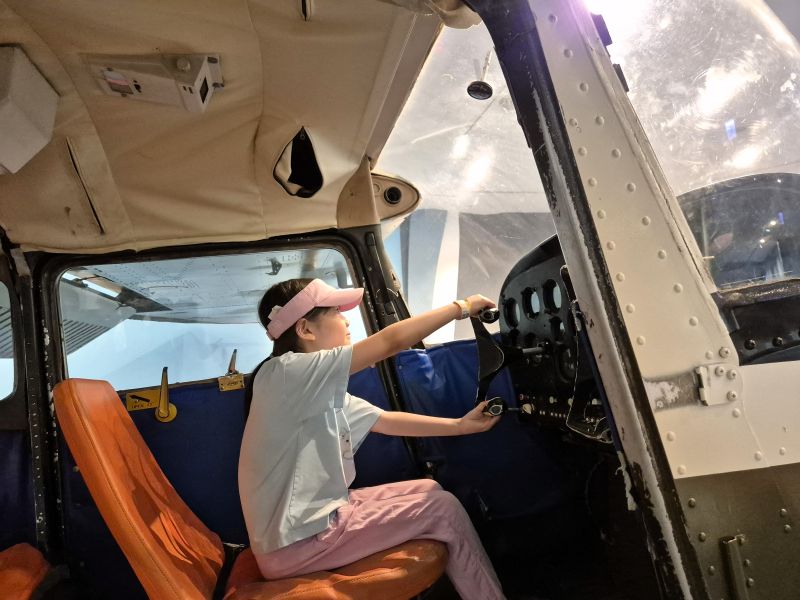
The best thing about this museum is that almost nothing is behind glass. Sit in a real cockpit. My daughter climbed into a decommissioned aircraft cockpit and got to grip the actual controls — not a plastic replica, the real instrument panel, worn edges and all. She sat there a full five minutes just turning the yoke, asking what every dial meant.
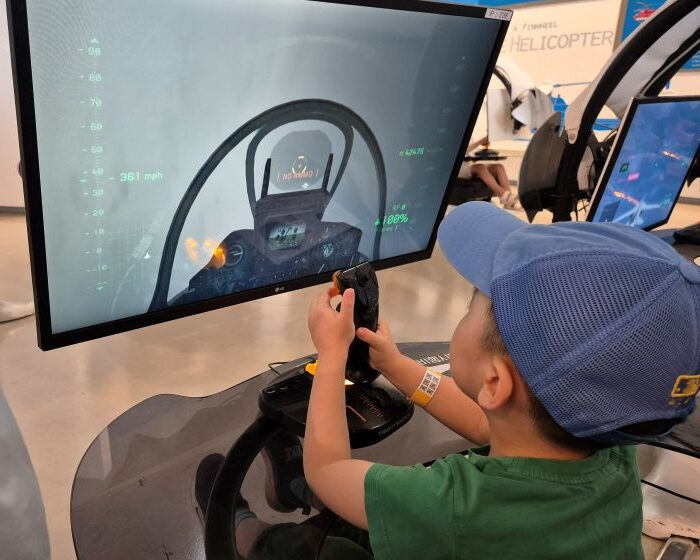
“Fly” a fighter jet simulator. My son planted himself in front of a Thrustmaster joystick rig and flight display, watching his speed climb past 500 mph on screen. He didn’t fully understand altitude or airspeed yet — but he understood enough to get hooked, which is really the whole point at this age.
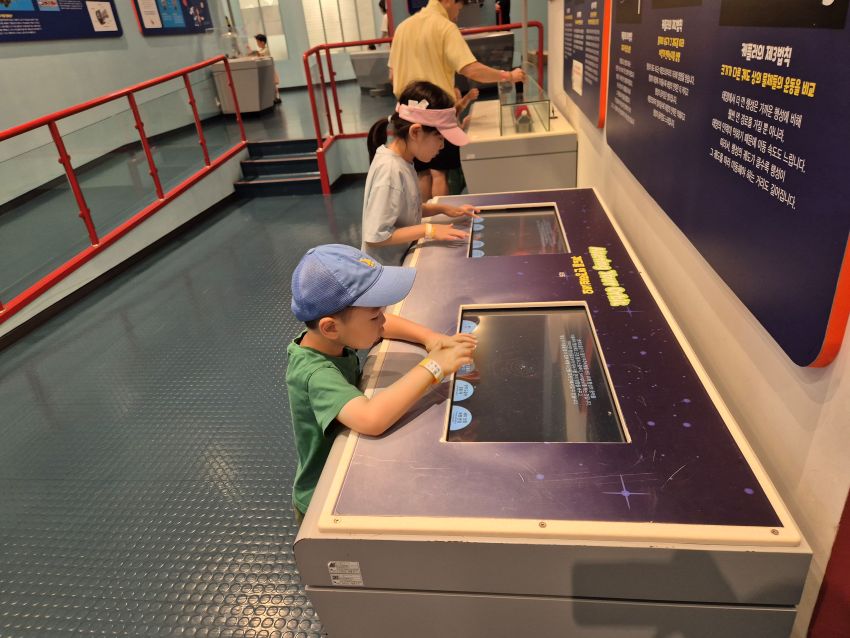
Touch-screen learning stations. Scattered through the exhibit halls are interactive kiosks where kids tap through questions about orbit, flight principles, and aviation history at their own pace. My two ended up teaching each other — my daughter reading the screen aloud, my son pointing at pictures. That kind of peer-to-peer moment is worth more than any worksheet.
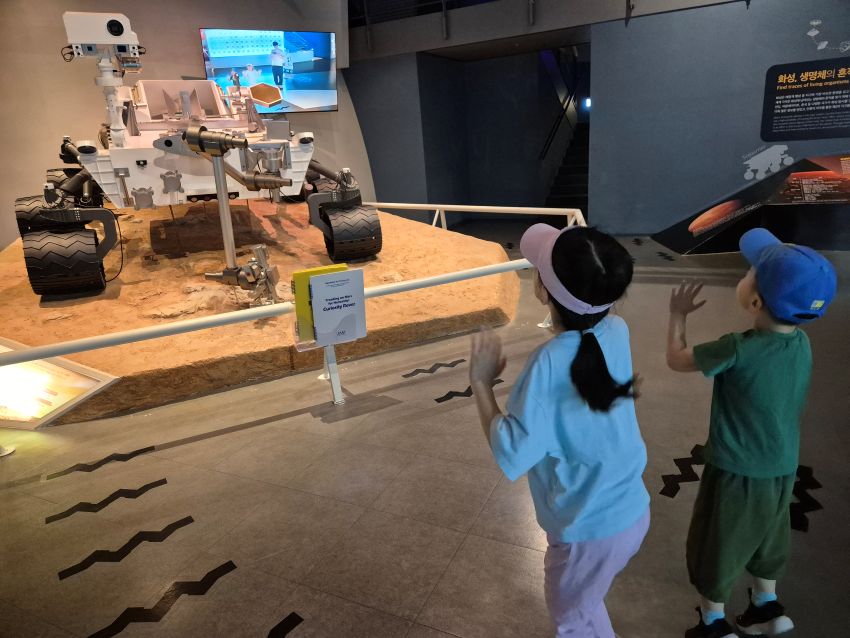
Full-size aircraft overhead. The main hall has real planes suspended from the ceiling and parked on the floor, including retired fighter jets kids can walk right up to. It’s genuinely striking — even adults slow down and look up.
The Real Lesson: Curiosity Doesn't Need a Lecture
I didn’t explain lift, thrust, or drag to my kids that day. I didn’t need to. The museum is built so that touching comes before understanding — you climb into the seat first, and the questions come naturally after. That’s the kind of learning I want more of in our life here: hands first, explanations only when they’re asked for.
This is also, quietly, one of the things I love about raising kids outside the traditional school-and-textbook pipeline. A single afternoon like this can plant a seed — “how do planes fly?” — that a whole semester of worksheets might not.
Practical Tips for Visiting with Kids
Time it right. Go on a weekday morning if you can — the simulators and touch stations get busy with school groups and weekend crowds.
Expect a full 2–3 hours if your kids want to try every hands-on station. Budget your energy accordingly.
Bring snacks. There’s plenty to see, but younger kids will need a refuel between the cockpit and the simulators.
Pair it with a slow finish. A short drive to a quiet noodle shop or a park nearby is the perfect decompression after all that stimulation.
Ages 4–10 are the sweet spot. Younger kids may lose interest at the more text-heavy exhibits, while this age range gets the most out of the hands-on stations.
Final Thought
Some of the best “curriculum” we’ve found in Jeju isn’t curriculum at all — it’s a cockpit you’re allowed to sit in, a joystick you’re allowed to crash with, and a bowl of noodles waiting at the end. If you’re building a life here with kids, or just passing through the island with little ones in tow, Jeju Aerospace Museum is worth the detour.
More from Life in Jeju: Raising Global Kids — stories of slow learning, third-culture childhoods, and finding school-shaped moments in unexpected places.
[Image Credits] All photos are personally taken unless otherwise noted