It was one of those peaceful weekend afternoons. No cartoons, no arguing over snacks, no stomping down the hallway. Just silence.
I peeked into the living room and found our 6-year-old on the floor, holding his breath, placing one puzzle piece at a time. Totally in the zone.
Then came the plot twist. The “quiet child” was actually our little Spider-Man, taking a break from saving the world. 🕷️
But the story didn’t end with a cute photo. Halfway through, he wanted to quit. What happened next is the real reason I’m writing this post.
Why Puzzles Are a Great Activity for 6-Year-Olds
At age six, children are building the skills they’ll need for school. Jigsaw puzzles quietly train several of them at once:
Fine Motor Skills and Hand-Eye Coordination
Picking up, turning, and fitting small pieces strengthens the finger control children later use for writing.
Spatial Reasoning and Problem-Solving
Deciding “Does this piece fit here, or should I rotate it?” is early logical thinking, the foundation for math and science.
Focus and Attention Span
A puzzle gives a child a clear goal and a screen-free reason to concentrate for a long stretch.
Lamppost photo
The Moment He Wanted to Give Up
About two-thirds of the way through, the easy pieces were gone. The remaining sky pieces all looked the same. He sighed, pushed a piece away, and said, “I can’t do it. This is too hard.”
As a parent, I felt two urges: take over and finish it for him, or say “just try harder.” Neither one really helps. Doing it for him says “you couldn’t do it,” and pushing him says “your feelings don’t matter.”
So I tried a third option: a small hint, not the answer.
5 Hints That Helped (Without Doing It for Him)
(H2, keywords: parenting tips, growth mindset for kids, building resilience in children)
1. Name the Feeling First
“This part looks really tricky, right? It’s okay to feel stuck.”
2. Shrink the Problem
“Forget the whole puzzle. Let’s find only the pieces with a little red on them.”
3. Point to an Area, Not a Piece
“I think the next one belongs somewhere around this corner.” He still does the finding.
4. Change the Strategy
Sort pieces by color, flip them all face-up, or look at the box picture together.
5. Take a Short Break
A two-minute snack break often resets a frustrated child better than any advice.
The Final Piece: What Pride Looks Like
When the last piece clicked into place, he didn’t just smile. He stood up, held the puzzle up high, and shouted, “I did it myself!” And he had, with a few nudges from me.
That feeling matters more than the finished picture. When children push through difficulty with gentle support, they learn three powerful lessons:
“Hard doesn’t mean impossible.” This is the heart of a growth mindset.
“I can handle frustration.” Emotional regulation grows through small wins like this.
“Asking for help is smart, not weak.” The hint was a tool, not a failure.
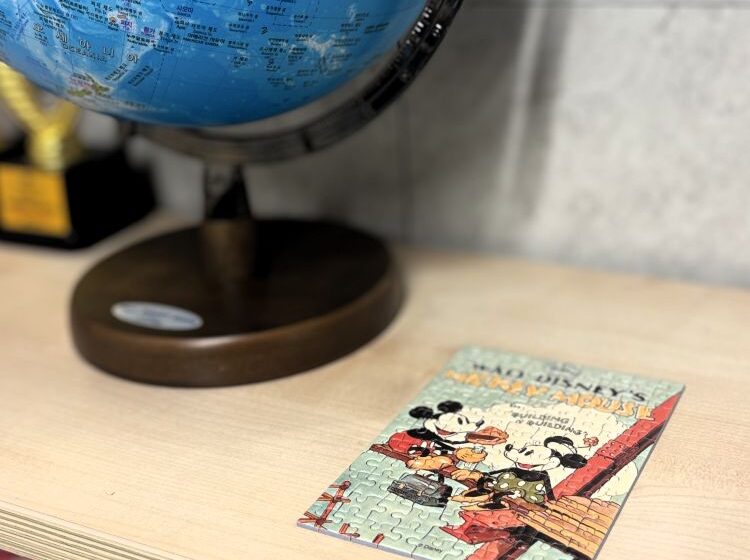
We displayed the puzzle on the living room table all week. He showed it to every visitor.
displayed the puzzle on the living room
Best Puzzles for Kids on Amazon
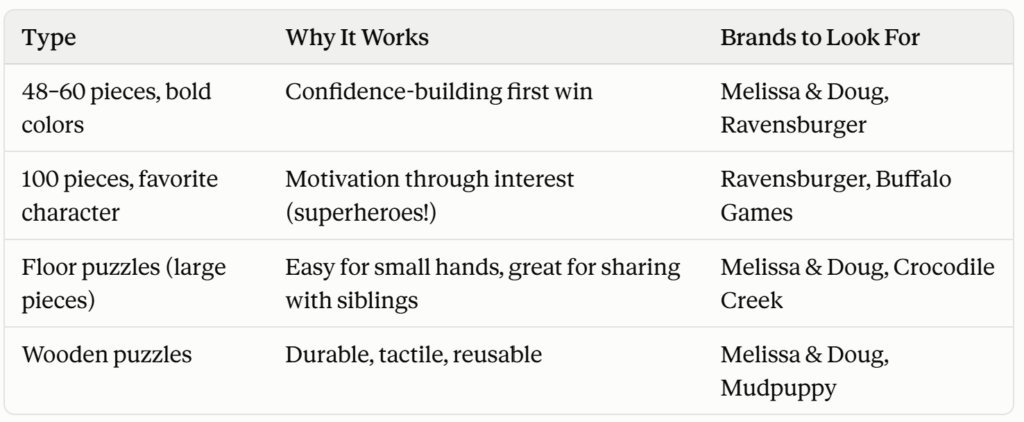
Choosing the right difficulty is the secret to success. Too easy is boring, too hard ends in tears. For 6-year-olds, 48 to 100 pieces is a good range. Here are the types and brands I’d look at:
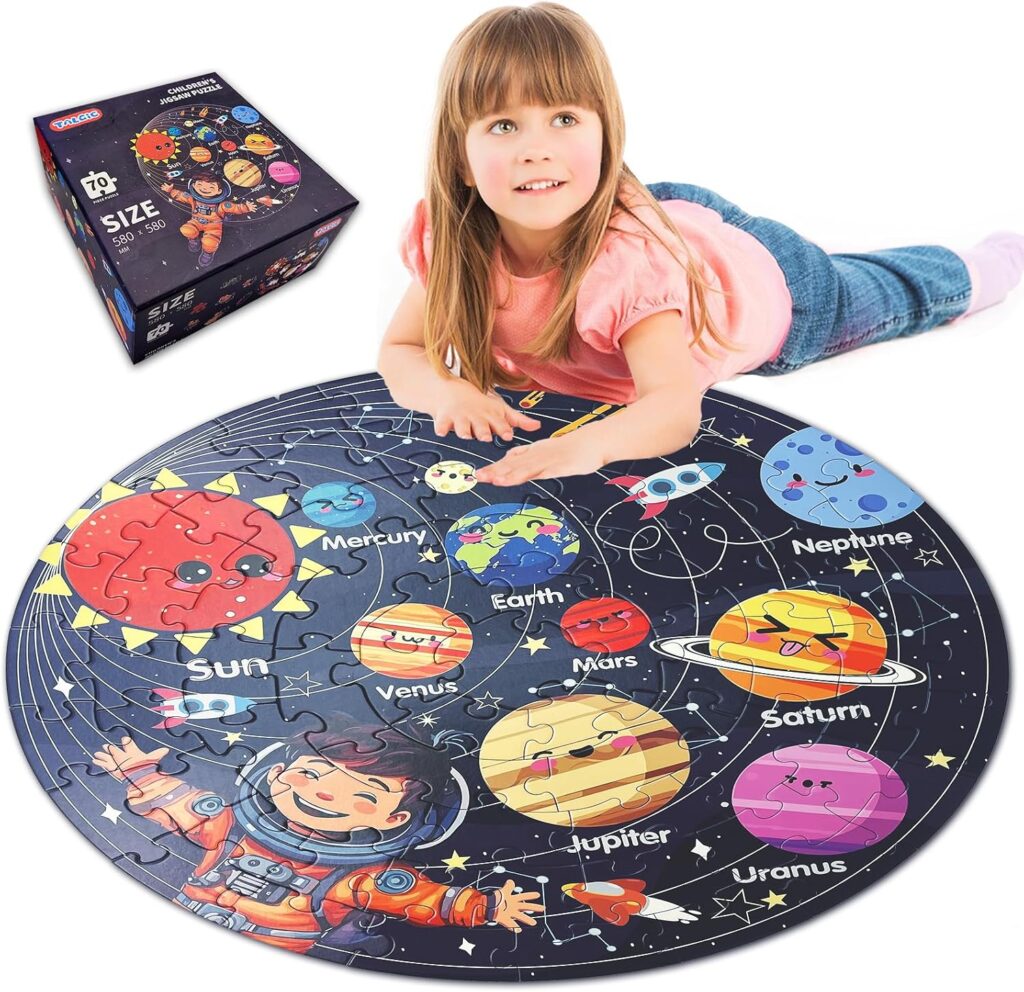
TALGIC Jumbo Floor Puzzle for Kids Ages 4-6, 70 Piece Solar System Puzzle
Saver Pad 46” x 26” Portable Keeper
Crocodile Creek 36-Piece Jigsaw Floor Puzzle
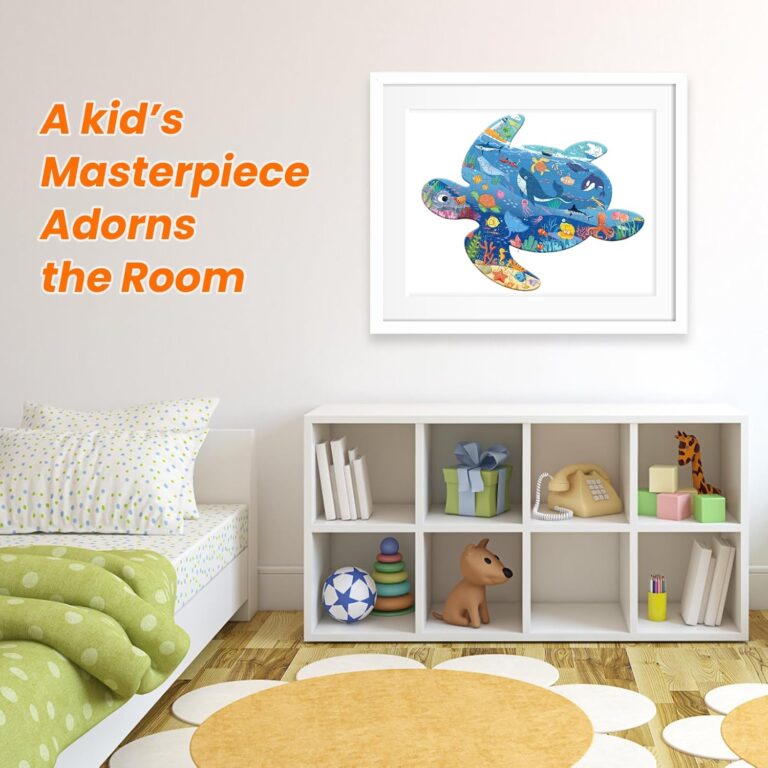
6-8, Sea Turtle Puzzles for Boys Girls
Tip: Check the age label, piece count, and recent reviews on each Amazon listing before buying, since products and prices change often.
Disclosure: This post may contain affiliate links. If you buy through them, I may earn a small commission at no extra cost to you.
Quick Tips for Parents
Match difficulty to age. Start with 48 pieces for ages 4–5 and 100 pieces for ages 6–7.
Hint, don’t solve. Point to a zone, never to the exact piece.
Praise effort, not speed. Say “You kept trying!” instead of “You’re so smart!”
Set up a puzzle spot. A tray or board lets a half-finished puzzle wait without being ruined.
Let them choose the theme. Superheroes, animals, or space increase motivation.
Allow breaks. Two minutes away often turns “I quit” into “I’ll try again.”
Celebrate the finish. Take a photo or display it. That recognition builds lasting pride.